
Top-rated independent heating and cooling across South Florida
Giving the Condenser Room to Breathe
You look out the window and the outdoor unit is half swallowed by hedge, with a bag of mulch leaning on one side and a hose reel on the other. It has run fine for years, so does any of that matter? It does. Here is what belongs around that unit, what needs to move, and the signs the crowding has already cost you.
Call (888) 560-0120- You reach a person, not a menu
- Open every day
- The quote comes first, in writing
Taking calls until 5:00 PM ET
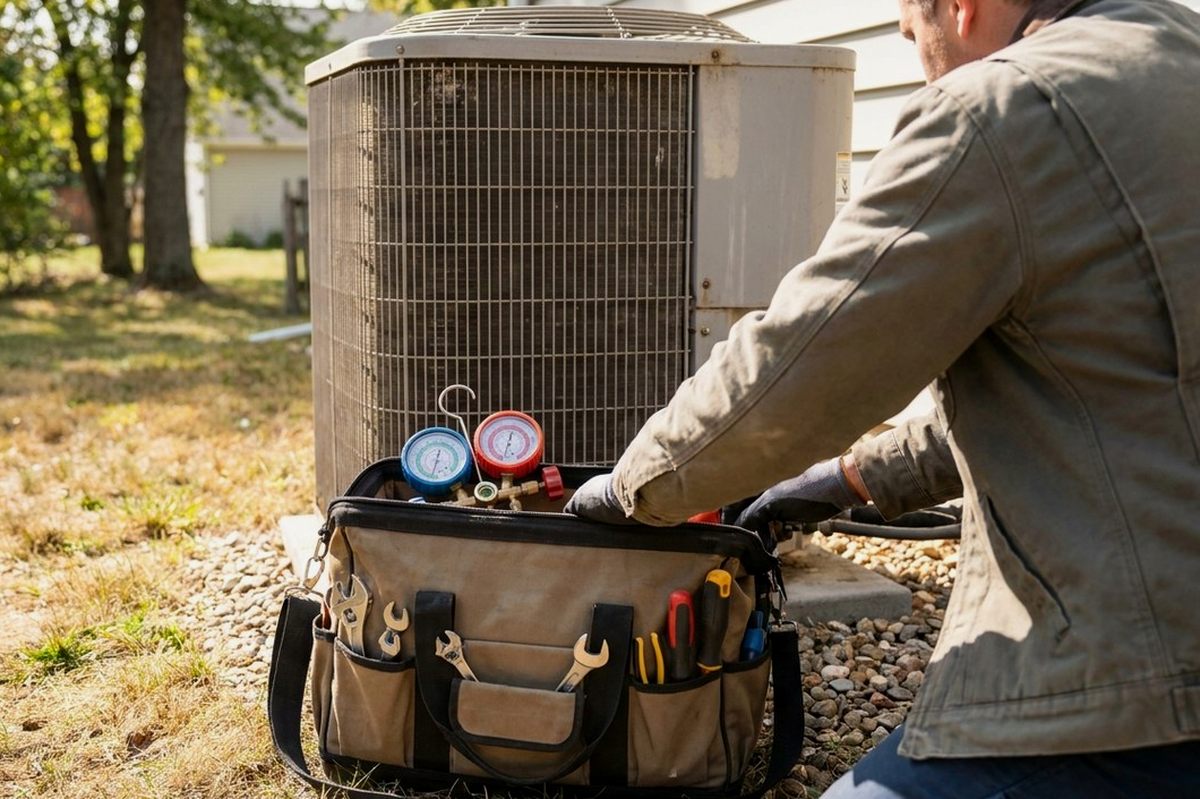
From the technicians at King Air & Heating
What Crowding Does to the Unit Over Time
The outdoor unit dumps heat from your house into the air around it. If that air cannot move, the heat has nowhere to go, so the unit runs longer and hotter to do the same job. Hot, recycled air raises pressures inside the system and pushes the compressor harder than it was built to work. Add our salt air and afternoon storms and the coil fins pack with leaf litter, grass clippings and grit that hold moisture against the metal. Corrosion starts where the debris sits. Years of this shows up as a compressor that fails early or a coil that leaks refrigerant at a fin you cannot see.
The Clearance That Actually Matters
Aim for about two feet of open space on every side and five feet of clear air above the fan. Nothing leaning, nothing stacked, nothing growing into it. That means shrubs trimmed back rather than shaped around the cabinet, pool floats and lawn bags stored elsewhere, and no lattice screen sitting tight to the panels. If you want to hide the unit, set the screen well back and leave a full side open. Also keep the top clear. That fan pulls air through the coil and pushes it straight up, so a plywood sheet or a hanging branch sends the heat right back down into the intake.
The Habit That Prevents All of It
Once a month, walk out with the trash and look at the unit for thirty seconds. Pull out anything that blew in against the base or wedged between the fins, cut back new growth, and move whatever got set down there. That is the whole habit. Twice a year, do a longer pass: after the spring growth push and again once storm season winds down, when the most debris has piled in. If you rinse the outside of the coil with a garden hose, keep the water gentle, spray from outside in, and shut the system off at the thermostat first. Anything past that is ours to open up.
Also Watch the Pad and the Drain
Clearance is about air, but two other things live down there. The pad under the unit should sit level. Ours settle in sandy soil, and a tilted unit stresses the refrigerant lines and can move oil away from where the compressor needs it. If you can see a clear lean, tell us. Second, find your condensate drain line, usually white PVC coming off the indoor unit. By late summer that line clogs with algae and sludge, and when it backs up you get water where you do not want it. Keep the area around the outdoor unit and the drain exit free of mulch and dirt so nothing blocks the outlet.
Warning Signs the Crowding Already Did Damage
Call us for air conditioning repair if the outdoor unit runs almost constantly on a normal day, if the air from your vents is cool but never quite cold, or if the unit shuts down after twenty minutes and starts again later. Those are the patterns we see when a system has been fighting for airflow. Ice on the lines, a burning or hot metal smell near the outdoor unit, or a breaker that trips more than once means stop and call. Do not reset it repeatedly. We handle AC repair and air conditioner repair across Florida, and we would rather look at a crowded unit than replace a compressor that quit early.
When it is time to book
Giving the Condenser Room to Breathe — straight answers
Can I plant flowers or shrubs around the outdoor unit?
Yes, if you keep about two feet of clear space on every side and trim as they grow. Avoid anything that drops heavy leaves or seed pods, since that debris packs into the coil fins and holds moisture.
Should I cover the outdoor unit in the off season?
In Florida the system runs most of the year, so a full cover is usually a bad idea. It traps moisture and invites nesting. If a storm is coming, clear loose objects from the area instead of wrapping the unit.
How often should the outdoor coil be cleaned properly?
A thorough coil cleaning once a year suits most homes here, and twice if you are near the coast or under heavy trees. We do that during maintenance, along with checking the drain line and refrigerant pressures.
How it works
- Step 1
Tell us the symptom
Call or fill in the quote form and describe what changed. Warm air, short cycling, a breaker that keeps tripping, water stains on the ceiling. That detail helps us bring the right parts.
- Step 2
We diagnose on site
A technician checks the thermostat, the electrical side, refrigerant performance, airflow and the condensate line. We find the actual cause instead of swapping parts and hoping the problem stays away.
- Step 3
You approve the repair
We explain what failed, what it takes to fix it, and how long the part is likely to last. Nothing gets replaced until you say go, and we test the system before leaving.
- A real person answers
- Open 7 days
- Written quote before work starts
Why homeowners call us
- Built for the salt airCoastal Florida is hard on outdoor equipment. Coils corrode, contactors pit, fan motors seize early. We look for that damage during every air conditioning repair so a small failure does not take the whole system down.
- Condensate lines we actually clearBy late summer, drain lines clog with algae and shut systems off on the float switch. We clear the line, check the pan and the safety switch, and show you what caused the backup.
- Heating tooCold snaps still arrive. We do heating repair and heater repair on heat pumps, strip heat and furnace repair where homes have one, so the system works in January as well as August.
- Plain talk about older systemsIf a repair makes sense, we repair it. If a unit is failing in ways that will keep costing you, we say that too and lay out the options. You decide, not us.
- All major brands, gas & electricEvery major HVAC brand, gas and electric, handled by an independent crew.
- Straight answersWhen a replacement beats a repair, we tell you, sometimes before we roll a truck.
About this guide
Checked everything on the list and it still acts up?
Mention which checks you ran when you book; it speeds up the visit.
- A real person answers
- Open 7 days
- Written quotes
- All major brands
- Gas & electric
Rather not call? Get a free quote →