
Top-rated independent heating and cooling across South Florida
Ice on the Indoor Coil
You open the closet and the indoor unit is wearing a coat of ice. The air out of the vents has gone weak and warm, and there is water on the floor under the air handler. That block of ice on the evaporator coil is a symptom, not the problem. Something is either starving the coil of air or starving it of refrigerant. Here is how to tell which, and what to do first.
Call (888) 560-0120- You reach a person, not a menu
- Open every day
- The quote comes first, in writing
Taking calls until 5:00 PM ET
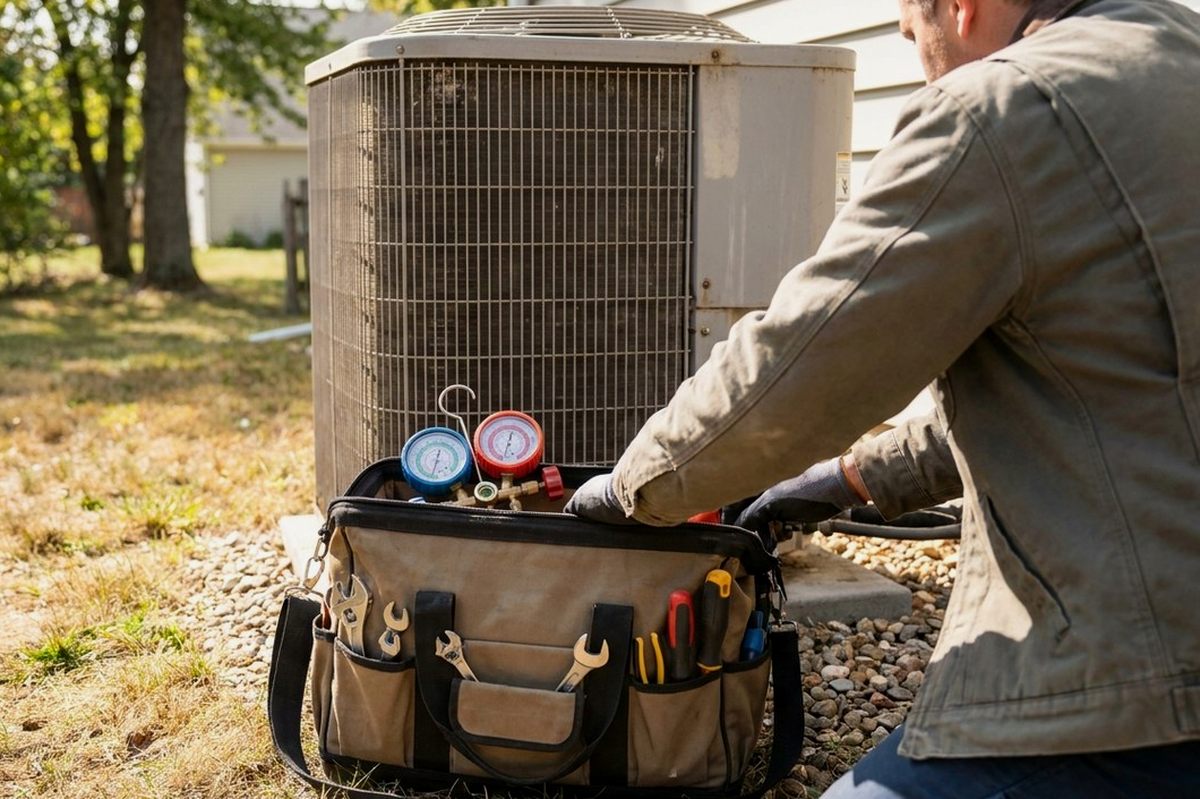
From the technicians at King Air & Heating
Turn the cooling off and run the fan first
Ice on the coil means the coil got colder than freezing, and once it ices over the air stops moving through it. Running the AC harder only grows the ice. Set the thermostat to OFF for cooling and switch the fan to ON. That pushes room air across the coil and melts it in a few hours. Put towels down, because the drain pan and line cannot handle the whole melt at once. If cooling comes back after the thaw and then dies again in a day or two, the cause is still there. We repair frozen coils across Florida and the wider region, and the thaw is just step one.
Airflow problems, the cheapest cause family
Most frozen coils we see start with air, not refrigerant. A filter loaded with dust chokes the coil. So do closed or blocked supply vents, a crushed flex duct in the attic, a return grille packed with pet hair, or a blower wheel caked in grime after years of humid running. Less air across the coil means the refrigerant inside never picks up enough heat, the coil surface drops below freezing, and condensation turns to frost. Change the filter, open every vent, and pull furniture off the returns. If the coil ices again with a clean filter, the restriction is deeper in the duct or on the blower.
Low refrigerant and the leak behind it
The second family is a low refrigerant charge. Less refrigerant in the system means lower pressure, lower boiling temperature, and a coil that runs cold enough to frost even with good airflow. Systems do not use refrigerant up. If it is low, it leaked, usually at a coil joint, a service valve, or a line set rubbed thin. Coastal air speeds that along. Adding refrigerant without finding the leak just buys a few months. This is not homeowner work and it is not legal to handle refrigerant without the right credentials, so leave the gauges to us.
Controls, drainage and the parts that fail quietly
A third group is electrical and mechanical. A failing blower motor or capacitor spins the fan too slowly to keep the coil warm enough. A stuck contactor keeps the compressor running when the thermostat says stop. A metering device that will not modulate floods or starves the coil. And in August, a clogged condensate line backs water into the pan, the float switch trips, and people assume the ice caused the shutdown when the drain did. Any of these can look identical from the hallway. What they have in common is that fixing the ice without fixing the part means you are back looking at frost next week.
What we do that a thaw cannot tell you
On an air conditioning repair call for a frozen coil, we thaw it, then measure. Static pressure across the coil tells us if the duct is restricted. Temperature split across the supply and return tells us if the system is moving the heat it should. Superheat and subcooling readings tell us if the charge is right before anyone touches a valve. We check the blower amp draw, inspect the wheel, and put a leak detector on the coil and line set if the numbers point that way. Then we tell you what failed and what it takes to fix it. Call King Air and Heating and we will get the AC repair scheduled.
When it is time to book
Ice on the Indoor Coil — straight answers
How long does a frozen evaporator coil take to thaw?
Two to eight hours with the fan running and cooling off. A thick block can take longer. Do not chip at it with anything sharp, because the coil fins and tubing bend and puncture easily.
Can I keep using the AC after it thaws?
You can run it, but watch it. If air weakens again within a day or two, shut cooling off and call for air conditioner repair. Repeated freezing strains the compressor, which is the expensive part.
Does a dirty filter really freeze a coil?
Yes, regularly. A filter left in through a humid summer restricts enough air that the coil surface drops below freezing. Change it, then see if the ice returns. If it does, the cause is elsewhere.
How it works
- Step 1
Tell us the symptom
Call or fill in the quote form and describe what changed. Warm air, short cycling, a breaker that keeps tripping, water stains on the ceiling. That detail helps us bring the right parts.
- Step 2
We diagnose on site
A technician checks the thermostat, the electrical side, refrigerant performance, airflow and the condensate line. We find the actual cause instead of swapping parts and hoping the problem stays away.
- Step 3
You approve the repair
We explain what failed, what it takes to fix it, and how long the part is likely to last. Nothing gets replaced until you say go, and we test the system before leaving.
- A real person answers
- Open 7 days
- Written quote before work starts
Why homeowners call us
- Built for the salt airCoastal Florida is hard on outdoor equipment. Coils corrode, contactors pit, fan motors seize early. We look for that damage during every air conditioning repair so a small failure does not take the whole system down.
- Condensate lines we actually clearBy late summer, drain lines clog with algae and shut systems off on the float switch. We clear the line, check the pan and the safety switch, and show you what caused the backup.
- Heating tooCold snaps still arrive. We do heating repair and heater repair on heat pumps, strip heat and furnace repair where homes have one, so the system works in January as well as August.
- Plain talk about older systemsIf a repair makes sense, we repair it. If a unit is failing in ways that will keep costing you, we say that too and lay out the options. You decide, not us.
- All major brands, gas & electricEvery major HVAC brand, gas and electric, handled by an independent crew.
- Straight answersWhen a replacement beats a repair, we tell you, sometimes before we roll a truck.
About this guide
Safe checks done and it still misbehaves? That's a real fault
Bring your notes from the checks to the call and booking takes no time.
- A real person answers
- Open 7 days
- Written quotes
- All major brands
- Gas & electric
Rather not call? Get a free quote →