
Top-rated independent heating and cooling across South Florida
Noises From the Condenser and What They Mean
Your outdoor unit used to hum. Now it buzzes, rattles like a stone in a can, or screeches when it kicks on. You want to know if you can keep running it or if you are about to lose cooling on a 95 degree afternoon. We handle air conditioning repair across Florida, and noise is one of the calls we get most.
Call (888) 560-0120- You reach a person, not a menu
- Open every day
- The quote comes first, in writing
Taking calls until 5:00 PM ET
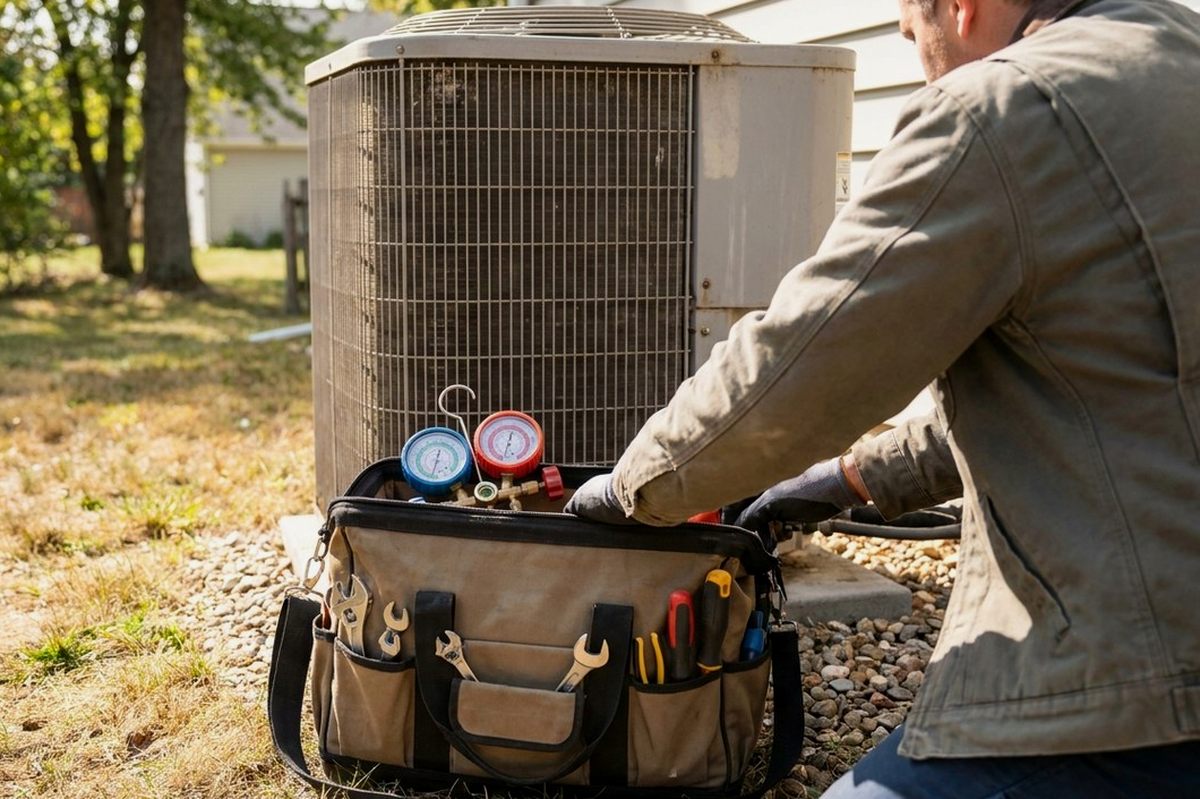
From the technicians at King Air & Heating
What the Noise Is Actually Telling You
A new sound means something moved, loosened, or is working harder than it should. The condenser outside holds a fan, a motor, a compressor, and a cabinet full of panels and fasteners. Rattling usually points at hardware or debris. Buzzing points at electrical parts or a fan struggling to spin. Screeching and squealing point at bearings or, less often, pressure inside the sealed refrigerant side. None of those fix themselves. Some are cheap now and expensive in three weeks, which is why we would rather look at a noise early than replace a compressor later. If the sound came with weak air or no cooling, shut the system off at the thermostat and call for AC repair.
Cause Family One: Loose Hardware and Debris
This is the cheapest thing it can be, and in our region it is common. Screws back out of the cabinet over years of vibration. Panels start to buzz against the frame. A palm frond, a piece of mulch, or a chunk of storm debris drops into the fan cage and slaps the blade on every rotation. Salt air also eats away at fasteners and mounting feet near the coast, so a unit that sat flat for years starts leaning and rattling on its pad. Fixes here are tightening, cleaning, and sometimes re-leveling. A technician checks for cracked blades at the same time, because a chipped fan blade goes out of balance and destroys the motor bearing.
Cause Family Two: Electrical Parts Buzzing
A steady, low buzz that starts and stops with the system usually comes from the contactor or the capacitor. The contactor is the switch that sends power to the compressor and fan, and its contacts pit and chatter as they wear. A weak capacitor leaves the fan or compressor straining to start, which shows up as a hum followed by a click, or a hum with no fan spin at all. Both are common wear parts. Both live behind a panel with high voltage and stored charge inside, so this is not a homeowner job at any skill level. If you hear a hard buzz and the fan is not turning, turn the system off and stop running it.
Cause Family Three: Motors, Bearings, and the Compressor
Screeching and metal-on-metal grinding usually means the fan motor bearings are going dry. It often starts as a chirp at startup and turns into a constant squeal. Left alone, the motor seizes, the coil stops shedding heat, and the compressor takes the abuse. A compressor in trouble sounds different again, more of a deep growl, a loud clatter, or a shudder that shakes the whole cabinet. That is the expensive end of the list, and it is the reason we push people to call on the first odd sound rather than the fifth week of it. We diagnose the noise source before quoting anything, because a motor and a compressor are very different repairs.
What You Can Safely Check, and What We Do Differently
Safe for you: pull leaves, grass clippings, and storm debris away from the outdoor cabinet so air can move. Check that the breaker for the outdoor unit has not tripped. Change a loaded filter and confirm your supply vents are open, since starved airflow makes the whole system work harder. Confirm the thermostat is set to cool and its batteries are fresh. That is the whole list. We go further with power off and meters out: amp draw on the motor, capacitor test, contactor inspection, refrigerant pressures, blade balance, and mount condition. That tells us whether you need a wear part or something larger, and we will say plainly which one it is.
When it is time to book
Noises From the Condenser and What They Mean — straight answers
Can I keep running my AC if it is just rattling?
Short term, sometimes. But a rattle from a loose blade or failing bearing gets worse fast and can take out the motor. If the noise is loud, new, or paired with weak cooling, shut it off and call us.
Why does my unit buzz for a second then go quiet?
That pattern often points to a capacitor or contactor that cannot get the fan or compressor started. It is a common wear part on Florida systems. Do not open the cabinet, since high voltage is stored inside even with power off.
Does the salt air here cause noise problems?
It contributes. Coastal humidity and salt corrode fasteners, mounting feet, and cabinet panels, so units loosen and vibrate sooner than they would inland. We check hardware and mount condition on every noise call for that reason.
How it works
- Step 1
Tell us the symptom
Call or fill in the quote form and describe what changed. Warm air, short cycling, a breaker that keeps tripping, water stains on the ceiling. That detail helps us bring the right parts.
- Step 2
We diagnose on site
A technician checks the thermostat, the electrical side, refrigerant performance, airflow and the condensate line. We find the actual cause instead of swapping parts and hoping the problem stays away.
- Step 3
You approve the repair
We explain what failed, what it takes to fix it, and how long the part is likely to last. Nothing gets replaced until you say go, and we test the system before leaving.
- A real person answers
- Open 7 days
- Written quote before work starts
Why homeowners call us
- Built for the salt airCoastal Florida is hard on outdoor equipment. Coils corrode, contactors pit, fan motors seize early. We look for that damage during every air conditioning repair so a small failure does not take the whole system down.
- Condensate lines we actually clearBy late summer, drain lines clog with algae and shut systems off on the float switch. We clear the line, check the pan and the safety switch, and show you what caused the backup.
- Heating tooCold snaps still arrive. We do heating repair and heater repair on heat pumps, strip heat and furnace repair where homes have one, so the system works in January as well as August.
- Plain talk about older systemsIf a repair makes sense, we repair it. If a unit is failing in ways that will keep costing you, we say that too and lay out the options. You decide, not us.
- All major brands, gas & electricEvery major HVAC brand, gas and electric, handled by an independent crew.
- Straight answersWhen a replacement beats a repair, we tell you, sometimes before we roll a truck.
About this guide
Safe checks done and it still misbehaves? That's a real fault
Bring your notes from the checks to the call and booking takes no time.
- A real person answers
- Open 7 days
- Written quotes
- All major brands
- Gas & electric
Rather not call? Get a free quote →