
Top-rated independent heating and cooling across South Florida
Inside a Proper Seasonal Tune-Up
You booked a tune-up, someone spent twenty minutes at your air handler, and you are wondering what actually got done. Fair question. A real maintenance visit is a list of checks and cleanings that keep an AC running through a Florida summer. It will not rebuild a worn compressor or add years to a system that is already failing. Here is the honest split.
Call (888) 560-0120- You reach a person, not a menu
- Open every day
- The quote comes first, in writing
Taking calls until 5:00 PM ET
From the technicians at King Air & Heating
What a real tune-up actually covers
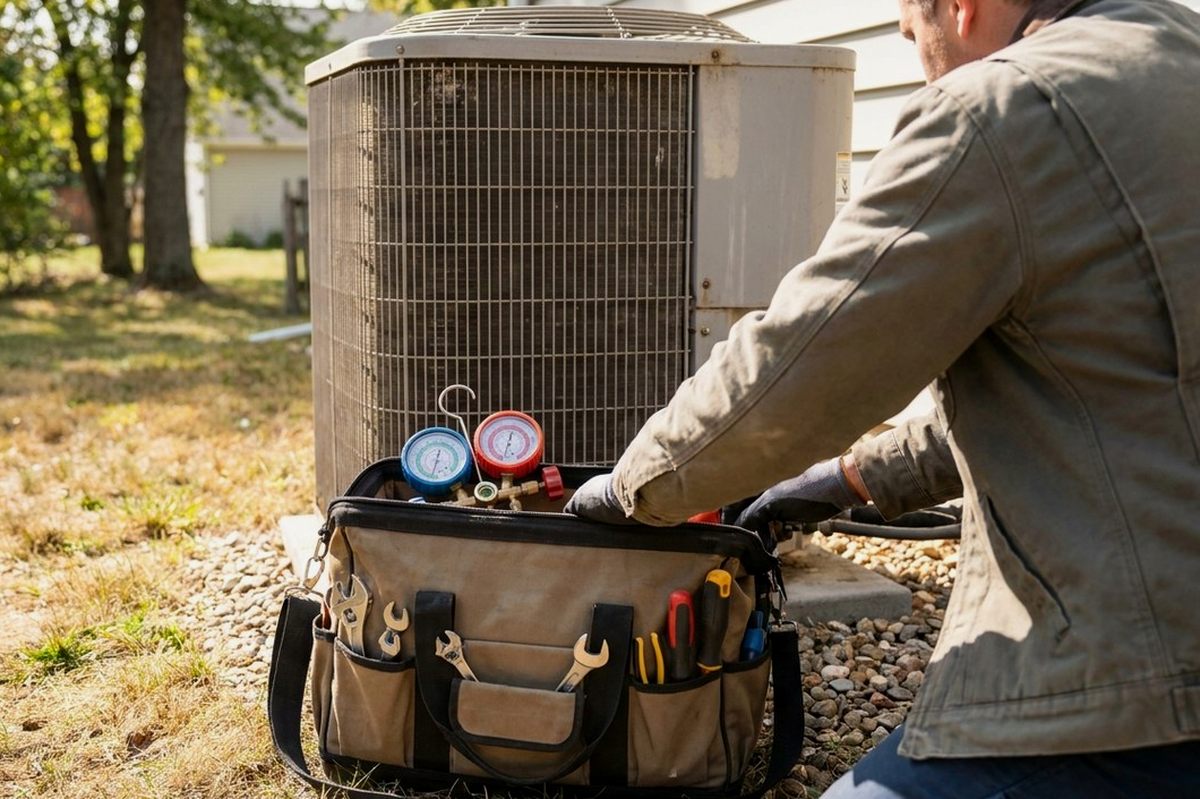
A proper visit starts at the thermostat and ends at the outdoor unit. We check the temperature split across the coil, read refrigerant pressures against outdoor conditions, and look at amp draw on the compressor and blower motor. We clear and flush the condensate drain, check the safety float switch, wash the outdoor coil, tighten electrical connections, inspect the contactor and capacitor for pitting and swelling, and change or check the filter. On heat, we verify the strips or burners fire and cycle off correctly. You should get a written record of readings, not a checkmark on a page.
What neglect does over time
Nothing breaks on the first skipped year. It stacks. A dirty coil makes the system run longer for the same cooling, which heats up the compressor and shortens its life. Algae builds in the condensate line, the drain pan fills, and water finds your drywall or the safety switch shuts the whole system down in August. Salt air chews at the outdoor coil fins and the electrical contacts. Capacitors weaken quietly for months, then the compressor tries to start on a weak capacitor and something expensive gives up. Most of the emergency air conditioning repair calls we run were preventable maintenance twelve months earlier.
How often, and the simple habit in between
Twice a year is the standard across the region, and in coastal Florida that is genuinely earned because your AC works most of the calendar. Spring before the humidity settles in, and fall to check the heat side. If you only do one, make it spring. Between visits, your job is small. Change the filter on a schedule you can remember, monthly for a one-inch filter in a house with pets. Keep a two-foot clearance around the outdoor unit, and pull the leaves and mulch off the coil after a storm. Check that no supply vents are closed or blocked by furniture.
What a tune-up will not fix
Maintenance is not a repair, and honest technicians say so. A tune-up will not restore a compressor with worn bearings, seal a refrigerant leak in a corroded coil, or fix ductwork that was undersized when the house was built. It will not make a fifteen-year-old system cool like a new one. It also will not correct humidity problems caused by leaky return ducts or an oversized system that short cycles. What it does is find those problems early, while you still have time to plan instead of scrambling during a heat wave. If we find something structural, we tell you what it is and what your options are.
Warning signs it is already too late for maintenance alone
Call for air conditioner repair rather than a tune-up if the air from the vents is barely cool, if the system runs constantly without reaching the setpoint, or if you hear a hard hum and a click when it tries to start. Water stains on the ceiling below an air handler, ice on the refrigerant line, or a breaker that trips more than once are all repair calls. Same for a burning smell. On the heating side, if you ever smell gas, leave the building first, then call 911 or your gas utility from outside, and call us after. We work across Florida and will tell you plainly whether it is a fix or a replacement conversation.
Inside a Proper Seasonal Tune-Up — straight answers
Is a tune-up worth it if my AC is running fine?
That is the point of it. Weak capacitors, a clogging drain line and a dirty coil all cause no symptoms until they cause a shutdown. A maintenance visit finds them while the system is still cooling normally.
How often should I change my filter in Florida?
Monthly for a one-inch filter, especially with pets or during heavy pollen. Thicker media filters can go three to six months. A restricted filter starves the blower and can freeze the coil.
Can maintenance stop a refrigerant leak?
No. Leaks come from corrosion, vibration or failed joints and need a repair, not a cleaning. A tune-up can catch pressure readings that point to a leak early, before the compressor takes damage.
How it works
- Step 1
Tell us the symptom
Call or fill in the quote form and describe what changed. Warm air, short cycling, a breaker that keeps tripping, water stains on the ceiling. That detail helps us bring the right parts.
- Step 2
We diagnose on site
A technician checks the thermostat, the electrical side, refrigerant performance, airflow and the condensate line. We find the actual cause instead of swapping parts and hoping the problem stays away.
- Step 3
You approve the repair
We explain what failed, what it takes to fix it, and how long the part is likely to last. Nothing gets replaced until you say go, and we test the system before leaving.
- A real person answers
- Open 7 days
- Written quote before work starts
Why homeowners call us
- Built for the salt airCoastal Florida is hard on outdoor equipment. Coils corrode, contactors pit, fan motors seize early. We look for that damage during every air conditioning repair so a small failure does not take the whole system down.
- Condensate lines we actually clearBy late summer, drain lines clog with algae and shut systems off on the float switch. We clear the line, check the pan and the safety switch, and show you what caused the backup.
- Heating tooCold snaps still arrive. We do heating repair and heater repair on heat pumps, strip heat and furnace repair where homes have one, so the system works in January as well as August.
- Plain talk about older systemsIf a repair makes sense, we repair it. If a unit is failing in ways that will keep costing you, we say that too and lay out the options. You decide, not us.
- All major brands, gas & electricEvery major HVAC brand, gas and electric, handled by an independent crew.
- Straight answersWhen a replacement beats a repair, we tell you, sometimes before we roll a truck.
About this guide
If the safe checks didn't fix it, the fault is real
Bring your notes from the checks to the call and booking takes no time.
- A real person answers
- Open 7 days
- Written quotes
- All major brands
- Gas & electric
Rather not call? Get a free quote →