
Top-rated independent heating and cooling across South Florida
Puddles by the Furnace
You walked past the closet or the garage and found a puddle under the furnace. Nothing smells burnt, the system may still be running, but there is water on the floor and you want to know if it is going to get worse. Most of the time this is drainage, not a cracked heat exchanger. Here is where the water usually comes from and what to do next.
Call (888) 560-0120- You reach a person, not a menu
- Open every day
- The quote comes first, in writing
Taking calls until 5:00 PM ET
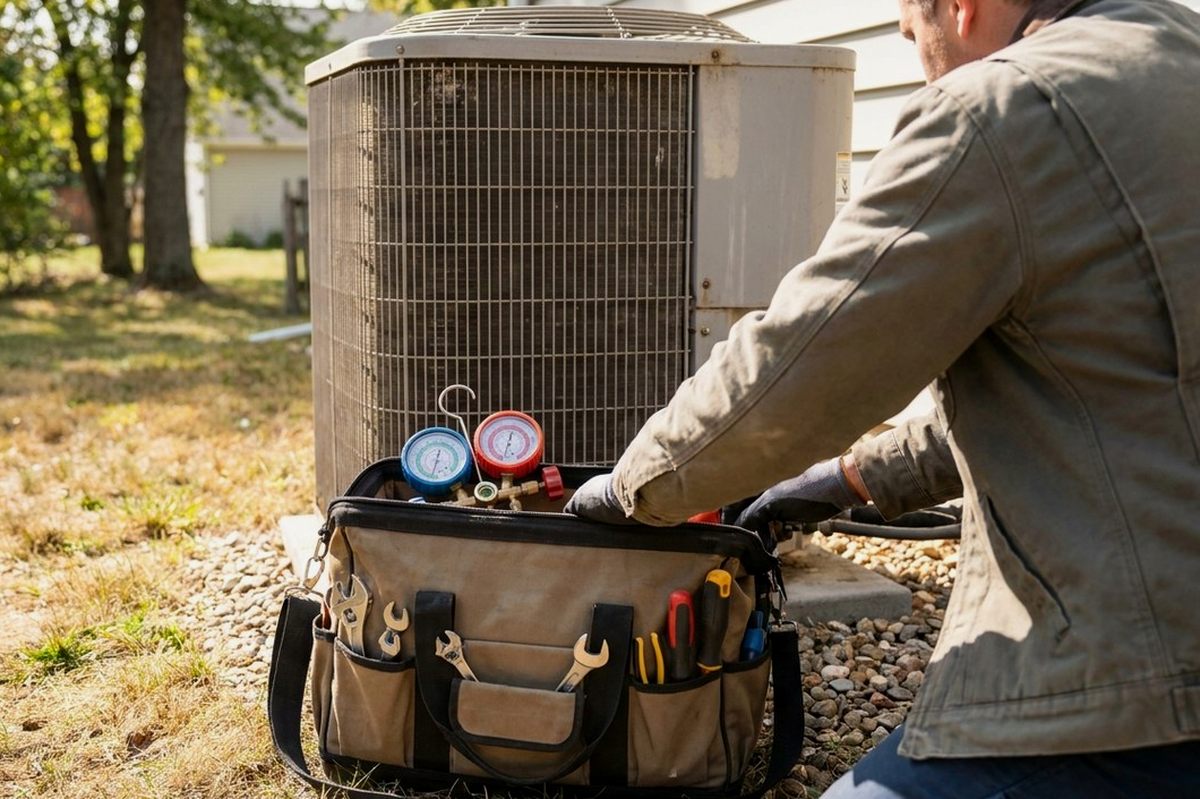
From the technicians at King Air & Heating
What a Puddle Under the Furnace Actually Means
In Florida the furnace or air handler shares a cabinet and a drain with your cooling side, so water on the floor almost always means condensate is going somewhere other than the drain line. Your indoor coil pulls gallons of moisture out of humid air every day. That water is supposed to collect in a pan and run out through a PVC line. When the pan cracks, the line clogs, or the pump quits, the water finds the floor instead. Shut the system off at the thermostat, mop up, and call us for air conditioning repair before drywall and framing get involved. Standing water near electrical parts is not something to poke at.
Cause One: A Clogged Condensate Drain
This is the cheapest and by far the most common. Algae, dust, and the fine grit that gets past a dirty filter build a plug inside the drain line, usually near the trap or where the line turns. Water backs up into the pan, overflows the edge, and lands on the floor. Many systems have a float switch that cuts the unit off before that happens, so a system that keeps shutting down on a hot afternoon is often telling you the same story. We clear the line, flush it, verify flow all the way to the termination point, and check that the trap is holding water the way it should.
Cause Two: Rusted Pan, Bad Slope, or a Failed Pump
Secondary drain pans sit under the cabinet and rust from the inside out, especially anywhere close to salt air. Once a pan is pinholed, every gallon of condensate goes straight to the floor. Same result if the primary pan has settled out of level or the drain line was run without enough fall, because water pools instead of draining. Systems in closets or attics often use a condensate pump, and when the float or motor in that pump fails the reservoir simply overflows. These are parts replacements, not cleanings, and they need the right pan or pump for your cabinet.
Cause Three: Frozen Coil, Then Meltwater
If the puddle shows up in bursts and the air from the vents feels weak, you may have had ice on the indoor coil. A restricted filter, a blower running slow, closed vents, or low refrigerant all let the coil drop below freezing. Ice forms, sheds water faster than the pan can drain, and you get a flood at odd hours. Refrigerant work is not a homeowner job and there is nothing to top off safely from outside the unit. Turn the system to fan only so the ice melts in a controlled way, then call us. We measure airflow and pressures to find the real cause instead of guessing.
Safe Checks, and What We Do Differently
You can safely change the filter, confirm the breaker has not tripped, check the thermostat settings and batteries, make sure supply and return vents are open, and clear leaves or mulch away from the outdoor unit. Stop there. Do not open the burner compartment, do not touch wiring, and if you ever smell gas, leave the building first, call 911 or your gas utility, then call us. On our side we pull the blower door, inspect the pan and coil, blow and vacuum the drain, test the float switch, check the trap, and read static pressure across the coil. That tells us whether the drain caused this or something upstream did. We handle heating repair and air conditioner repair across the region, so the same visit covers both sides of the system.
Puddles by the Furnace — straight answers
Can I keep running the system with water on the floor?
We would rather you did not. Every hour it runs adds more condensate to the puddle, and water near electrical components and framing gets expensive fast. Switch it off at the thermostat and call for AC repair.
Is water under the furnace a sign of a cracked heat exchanger?
Rarely in Florida. Almost all indoor puddles are condensate drainage from the cooling coil that shares the cabinet. We still inspect the heat exchanger during the visit, but drainage is the first thing we check.
How often does a condensate line need clearing?
Once a year for most homes here, done as part of maintenance before the humid stretch. Systems in dusty spaces or with a history of clogs sometimes need a mid-season flush to stay ahead of it.
How it works
- Step 1
Tell us the symptom
Call or fill in the quote form and describe what changed. Warm air, short cycling, a breaker that keeps tripping, water stains on the ceiling. That detail helps us bring the right parts.
- Step 2
We diagnose on site
A technician checks the thermostat, the electrical side, refrigerant performance, airflow and the condensate line. We find the actual cause instead of swapping parts and hoping the problem stays away.
- Step 3
You approve the repair
We explain what failed, what it takes to fix it, and how long the part is likely to last. Nothing gets replaced until you say go, and we test the system before leaving.
- A real person answers
- Open 7 days
- Written quote before work starts
Why homeowners call us
- Built for the salt airCoastal Florida is hard on outdoor equipment. Coils corrode, contactors pit, fan motors seize early. We look for that damage during every air conditioning repair so a small failure does not take the whole system down.
- Condensate lines we actually clearBy late summer, drain lines clog with algae and shut systems off on the float switch. We clear the line, check the pan and the safety switch, and show you what caused the backup.
- Heating tooCold snaps still arrive. We do heating repair and heater repair on heat pumps, strip heat and furnace repair where homes have one, so the system works in January as well as August.
- Plain talk about older systemsIf a repair makes sense, we repair it. If a unit is failing in ways that will keep costing you, we say that too and lay out the options. You decide, not us.
- All major brands, gas & electricEvery major HVAC brand, gas and electric, handled by an independent crew.
- Straight answersWhen a replacement beats a repair, we tell you, sometimes before we roll a truck.
About this guide
When the easy checks change nothing, it's time for a tech
Mention which checks you ran when you book; it speeds up the visit.
- A real person answers
- Open 7 days
- Written quotes
- All major brands
- Gas & electric
Rather not call? Get a free quote →