
Top-rated independent heating and cooling across South Florida
Which Heat Pump Faults Are Worth Fixing
Your heat pump quit, or it runs and runs without cooling the house, and the question in your head is simple: fix it or replace it? We repair heat pumps for homeowners across Florida, and most of the time a repair is the right call. Here is how we think it through on site, in plain language, so you can decide with real information instead of a guess.
Call (888) 560-0120- You reach a person, not a menu
- Open every day
- The quote comes first, in writing
Taking calls until 5:00 PM ET
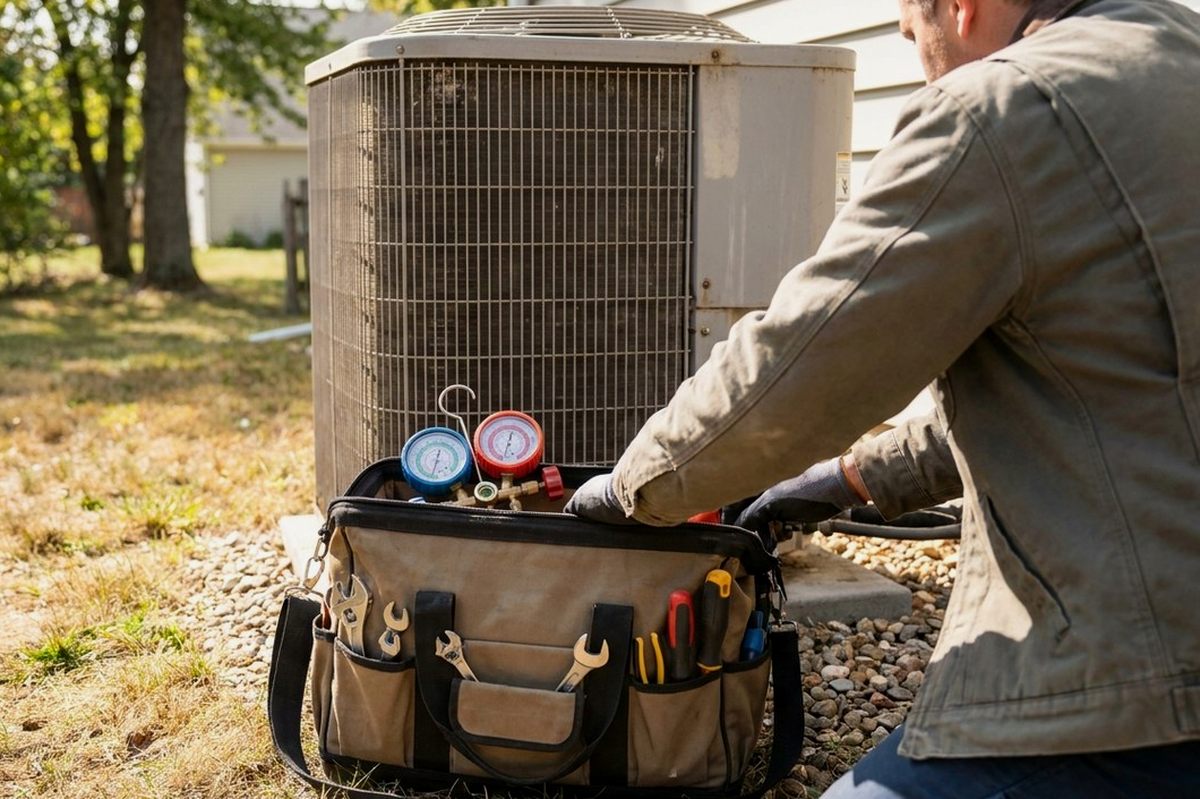
From the technicians at King Air & Heating
Age matters, but it is not the whole story
A heat pump that has been running through Florida summers for a decade or more has earned its wear. Coastal air is hard on outdoor equipment, and salt eats at coil fins, cabinet screws and contactor points long before the compressor gives up. Still, age alone does not condemn a system. We look at how the unit has been maintained, whether the coil is still clean metal or crumbling, and whether the blower and controls are in decent shape. A well kept older heat pump with one bad part is usually worth repairing. A neglected one with corrosion in three places is telling you something different.
The fault type tells you most of what you need to know
Some failures are routine. Capacitors, contactors, reversing valve solenoids, defrost boards, condensate pumps, blower motors and thermostats are all normal parts that wear out and get replaced. Those repairs make sense at almost any age, because the rest of the system keeps working afterward. Other failures sit at the heart of the machine. A failed compressor or a leaking evaporator coil is a different conversation, since the repair touches the sealed refrigerant circuit and the labor is heavy. When we find one of those, we lay out the repair path and the replacement path side by side and let you pick.
Parts availability and refrigerant matching
A repair only makes sense if the part exists. Older heat pumps sometimes use control boards or coils that manufacturers no longer build, and a substitute is not always available. We check that before we recommend anything. Refrigerant type matters too. Systems built for older refrigerants can still be serviced, but supply tightens over time and topping off a leaking system is a short term move at best. If your outdoor unit and indoor coil were never a matched set, or a previous repair mixed components, the system may never perform right no matter what we replace. We will tell you if that is what we find.
How we work through it on a service visit
We start with what you noticed, then we test rather than assume. Electrical readings at the unit, refrigerant pressures, temperature split across the coil, airflow at the return, condensate drain condition. Clogged drains cause more August shutdowns than anything else, and that is a cleaning, not a replacement. Once we know the actual fault, we tell you what part failed, whether it is available, and what else in the system is close to the end. If a second failure is likely within the next season or two, you deserve to hear that before you spend money on the first one.
Honest cases where replacement is the better spend
Sometimes we recommend a new system, and here is when. A compressor failure in an old, corroded outdoor unit. A leaking evaporator coil that is no longer manufactured. A cabinet so rusted that new components have nothing solid to mount to. Repeat refrigerant leaks that keep reappearing in different spots, which usually means the tubing itself is going. Or an indoor and outdoor pairing that was never designed to work together. In those cases repair money buys you a short reprieve instead of a working system. We will show you what we found so the decision is yours, not ours.
Related guides
Which Heat Pump Faults Are Worth Fixing — straight answers
Can I just add refrigerant instead of fixing the leak?
Adding refrigerant to a leaking system is temporary, and the charge will go back out the same hole. We find and address the leak first. Refrigerant work is not something a homeowner should attempt.
What safe checks can I do before calling?
Check thermostat batteries and settings, look for a tripped breaker, change a dirty filter, clear leaves and debris away from the outdoor unit, and confirm supply vents are open. Anything past that, call us.
Is a heat pump repair worth it if the unit is old?
Often yes, if the failed part is a normal wear item like a capacitor, contactor or blower motor and the rest of the system is sound. Compressor and coil failures in a corroded unit lean toward replacement.
How it works
- Step 1
Tell us the symptom
Call or fill in the quote form and describe what changed. Warm air, short cycling, a breaker that keeps tripping, water stains on the ceiling. That detail helps us bring the right parts.
- Step 2
We diagnose on site
A technician checks the thermostat, the electrical side, refrigerant performance, airflow and the condensate line. We find the actual cause instead of swapping parts and hoping the problem stays away.
- Step 3
You approve the repair
We explain what failed, what it takes to fix it, and how long the part is likely to last. Nothing gets replaced until you say go, and we test the system before leaving.
- A real person answers
- Open 7 days
- Written quote before work starts
Why homeowners call us
- Built for the salt airCoastal Florida is hard on outdoor equipment. Coils corrode, contactors pit, fan motors seize early. We look for that damage during every air conditioning repair so a small failure does not take the whole system down.
- Condensate lines we actually clearBy late summer, drain lines clog with algae and shut systems off on the float switch. We clear the line, check the pan and the safety switch, and show you what caused the backup.
- Heating tooCold snaps still arrive. We do heating repair and heater repair on heat pumps, strip heat and furnace repair where homes have one, so the system works in January as well as August.
- Plain talk about older systemsIf a repair makes sense, we repair it. If a unit is failing in ways that will keep costing you, we say that too and lay out the options. You decide, not us.
- All major brands, gas & electricEvery major HVAC brand, gas and electric, handled by an independent crew.
- Straight answersWhen a replacement beats a repair, we tell you, sometimes before we roll a truck.
About this guide
Past the safe checks, it's a job for tools and a meter
Tell us what you tried and what it did. The booking itself takes a minute.
- A real person answers
- Open 7 days
- Written quotes
- All major brands
- Gas & electric
Rather not call? Get a free quote →